



As a former raver—particularly in the drum and bass and techno scenes—it goes without saying that I had high expectations for ‘Paraíso’. For me, and for many of my friends, it wasn't a chance that led us to the raves, nor was it even something we did every weekend. It was a culture, a community, music, freedom, and the place where I experienced many of the best moments, experiences, memories and lessons of my life. So, after all these years, it was moving to watch a documentary about the discovery and rise of electronic and dance music in Portugal. That’s why I didn’t (and don’t) view *Paraíso* as an observer, but as a remembrance, a tribute to the artists and friends who came before me.
In Paraíso, Daniel Mota (director) presents a tribute rather than a story; a celebration and remembrance of a very particular era that was chaotic, jubilant, unique, and which has never been recreated in the same way since. With an abundance of visual and audio archive material collected over many years, the film transports viewers back to the late 80s, 90s and 2000s, allowing them to experience that unique moment.
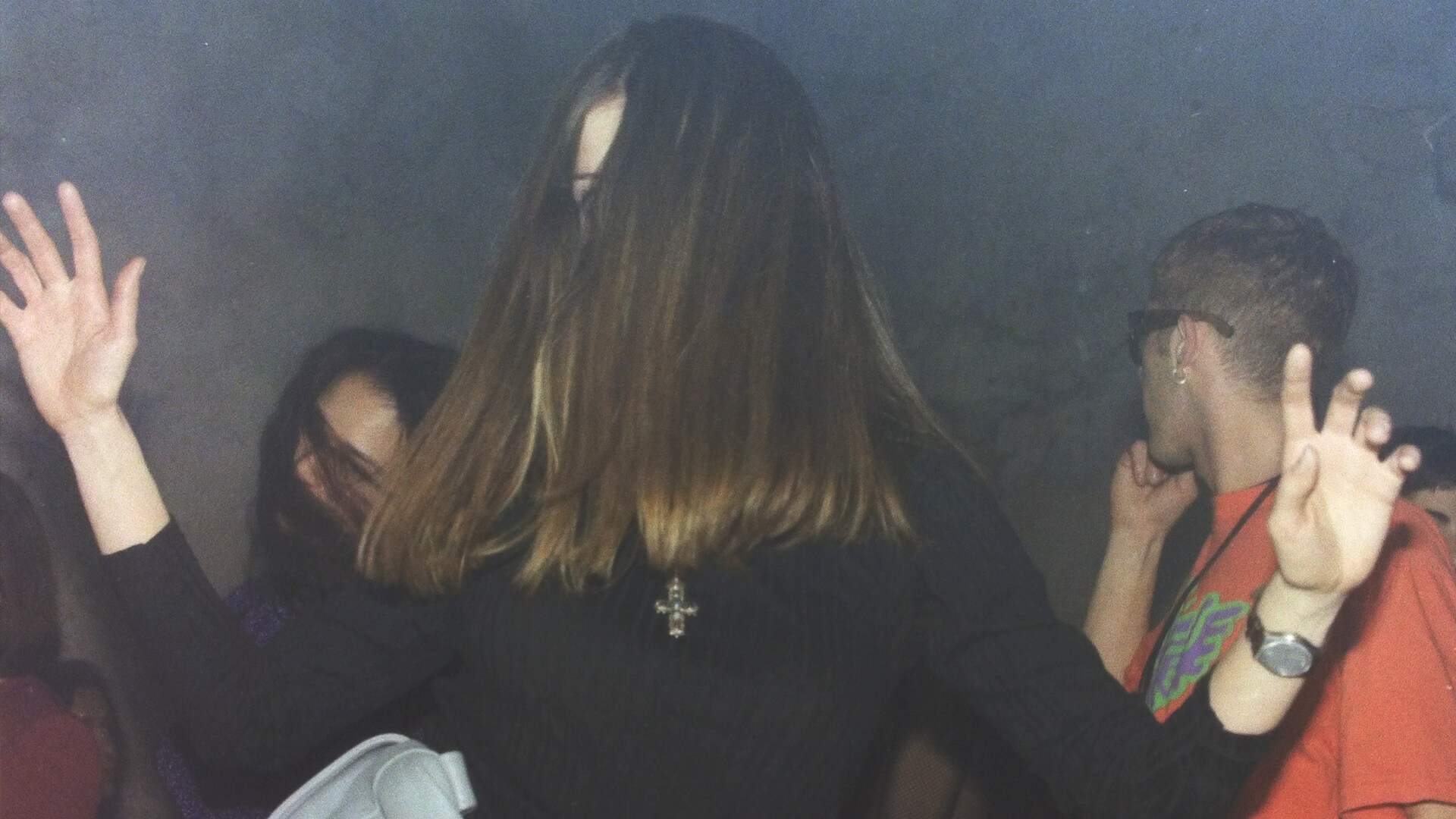
The archive footage is stunning. It is wonderful to see images of dancers, promoters, DJs, posters, unusual venues and aching, groggy bodies in the early hours. Names such as DJ Vibe, Rob di Stefano, Alcântara Dancers, DJ Morgana and Paulo Leite, among many others — names that have left their mark on the Portuguese rave scene — lend their voices to Paraíso. There are no forced reconstructions of these memories. These images represent life on the scene, and that is why they are so raw. You can feel the bass pumping, smell the smoke, the sweat and the fresh air. If you’ve had even a little of that experience, it’s easy to feel an uncontrollable joy. There is joy, innocence, danger and an environmental sensibility.
The film, wisely, lets the young people speak for themselves. ‘Paraíso’ is not so much about the voice of God. The DJs, party promoters, musicians and others speak to us as the voice of youth. This lends the film legitimacy. And it gives it intimacy. The plot is about revolution, not raves. And we understand how Portugal reacted to the rave phenomenon.
These are the most moving moments of the documentary. From nightclub venues to warehouses, from after-hours parties to the countryside, to convents and castles, it is a fascinating part of the narrative. This was an era when dance culture was not merely about playing music; it was another way of dealing with time and space. Time was no longer simply night and day. It was also a time that stretched into the early hours of the day, into late morning, a permissive space. Escape is fundamental to the history of raves; and the film highlights this.
A second feature of Paraíso is that Portugal is presented as more than just the backstage of the dance world. It is a narrative told through the conversation between these Portuguese DJs and promoters and their American counterparts. It seems to suggest that there was a Portuguese flavour here, a particular vibe, something that was a bit house, a bit techno, a bit trance. This is important, as it challenges the impression that Portugal was always on the sidelines, always lagging, always unimportant. In a subtle yet powerful way, Paraíso suggests that something significant happened here.
The section on ‘So Get Up’, the anthem that embodied the ‘Portuguese flavour’ of Underground Sound of Lisbon’s (Rui da Silva and DJ Vibe) electronic dance music, is beautiful. The film treats the song as a club anthem, but also as a symbol of an era of electronic dance music that once eluded Portugal. The way this track spread, was promoted, the way those stories unfolded, are part of how rave culture is produced and scenes are created: by telling stories.
It’s funny too. The interviews about parties, drugs and all the excesses are often humorous, not because the film trivialises these events, but because of its understanding of the moment. The play on double meanings, puns, etc., in many of the interviewees talking about themselves when they were young is funny. Of course, the film does not ignore the negative side. The debris, the danger, the exhaustion and the fragility of the era are ever-present.
Perhaps the film’s weakness is that Paradise is too nostalgic to serve as a catalyst for a much broader discussion. Thus, the destruction of this ‘rave paradise’ is merely mentioned. There is talk of monetisation, institutionalisation, excess and the loss of soul, but little is addressed regarding these issues. However, perhaps that is the intention. This is not a sociological study, but rather a film about life, and life is often lived in fits and starts, with an element of incompleteness.
Ultimately, Paraíso works because it is about more than just musical genres, infamous clubs and huge parties. It is about social inclusion, discovery, liberation and transformation. For those of us who arrived later, especially those who have spent years in the drum and bass, techno and rave movement for a long time, this film is an encounter with the people who made all this possible.
I want to end my journey to Paraíso with a thank you. Thank you to those who set out to start a revolution, to the DJs, the event organisers, the dancers, the artists and everyone else who had an idea and made the emergence of electronic culture in Portugal possible. They have allowed us to experience levels of intensity, communion, ecstasy, and to share them with millions of others. They have allowed a culture to emerge that has given many of us the best years of our lives. For that, we must applaud and thank them.