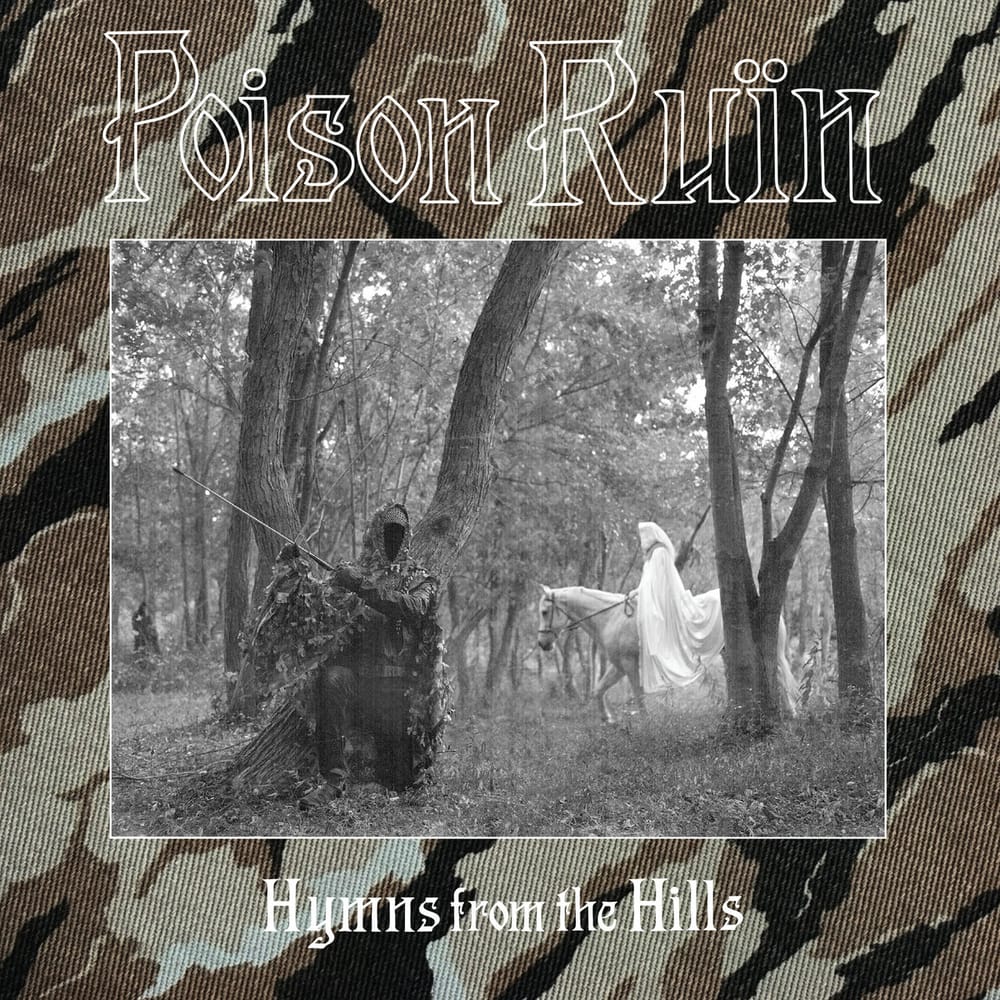
When discussing innovation in punk music — a style whose very essence is pure rawness — Poison Ruïn is a name that must be mentioned to anyone looking to push beyond punk’s known ground . Based in Philadelphia, the group explores its DIY attitude to create a stimulating blend of genres and influences. At its core sit anarcho-punk, metal, and hard rock, complemented by the inclusion of synthesizers that lead the music towards a mysticism all its own. Fans refer to the genre as "Dungeon Punk", a coherent label, easy to assimilate.
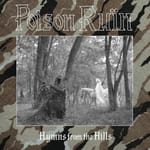
Hymns From The Hills is the second full-length released since landing on Relapse Records. On an initial reflection, after hearing the record for the first time, I feel compelled to point out a paradox in its production. Yes, this is clearly Poison Ruïn music. The dark atmosphere is present, amidst their signature lo-fi layering and the usual punk aggression. But, at the same time, the sound feels more expansive, the listener is no longer outside of the dungeon, drawn closer to the band's instruments. The cavernous elements remain, the cassette tape feeling is still present, though less pronounced.
This lateral shift is an intentional detail, planned by Mac Kennedy, the project’s founder and creative mastermind. As support for this evolving stage, Jonah Falco (Fucked Up, Career Suicide) and Arthur Rizk (Power Trip, Code Orange) were brought in, handling mixing and mastering respectively. This new approach delivers a cleaner sound, less grainy, but anyone thinking Poison Ruïn's principles got lost along the way would be mistaken. Actually, it’s quite the opposite: the creative process follows the band's usual practices, considering that the recordings were made by Kennedy himself, without any professional studio equipment. Even after Falco and Rizk's professional treatment, Kennedy returns to the mixing stage to "sabotage" the previous work, intentionally degrading any excess sonic purity. Their soul is definitely there, but more transparent, vivid and evident to our ears.
Some influences are now openly exposed and the band's creativity feels more unleashed. The writing sounds more direct, less allegorical than previous works, while still drawing on symbolism and mythology to implicitly judge contemporary reality. Kennedy's vocals are also a step forward, showing respectable levels of versatility — this eclecticism can be heard, for example, in "Lily Of The Valley", a post-punk track (teetering almost on the edge of something pop-leaning), held back for years, where the voice takes on a gothic shade with an expressiveness that hadn’t surfaced in his preceding work.
The concept is pulled closer to folk references through the inclusion of new instruments, notably the harmonica imparting distinction to "Hymns From The Hills", the title track, and the acoustic guitar present both there and in "Howls From The Citadel"; a breather-moment with a mourning insinuation. Traces of Doom inspiration are revealed in “Intro”, resurface in the interlude “Sleeping Giant” and break through at the opening of “Eidolon”, one of the lead singles and the most convincing moment of the record, where the riff is not always predictable, sustaining the frenetic pace.
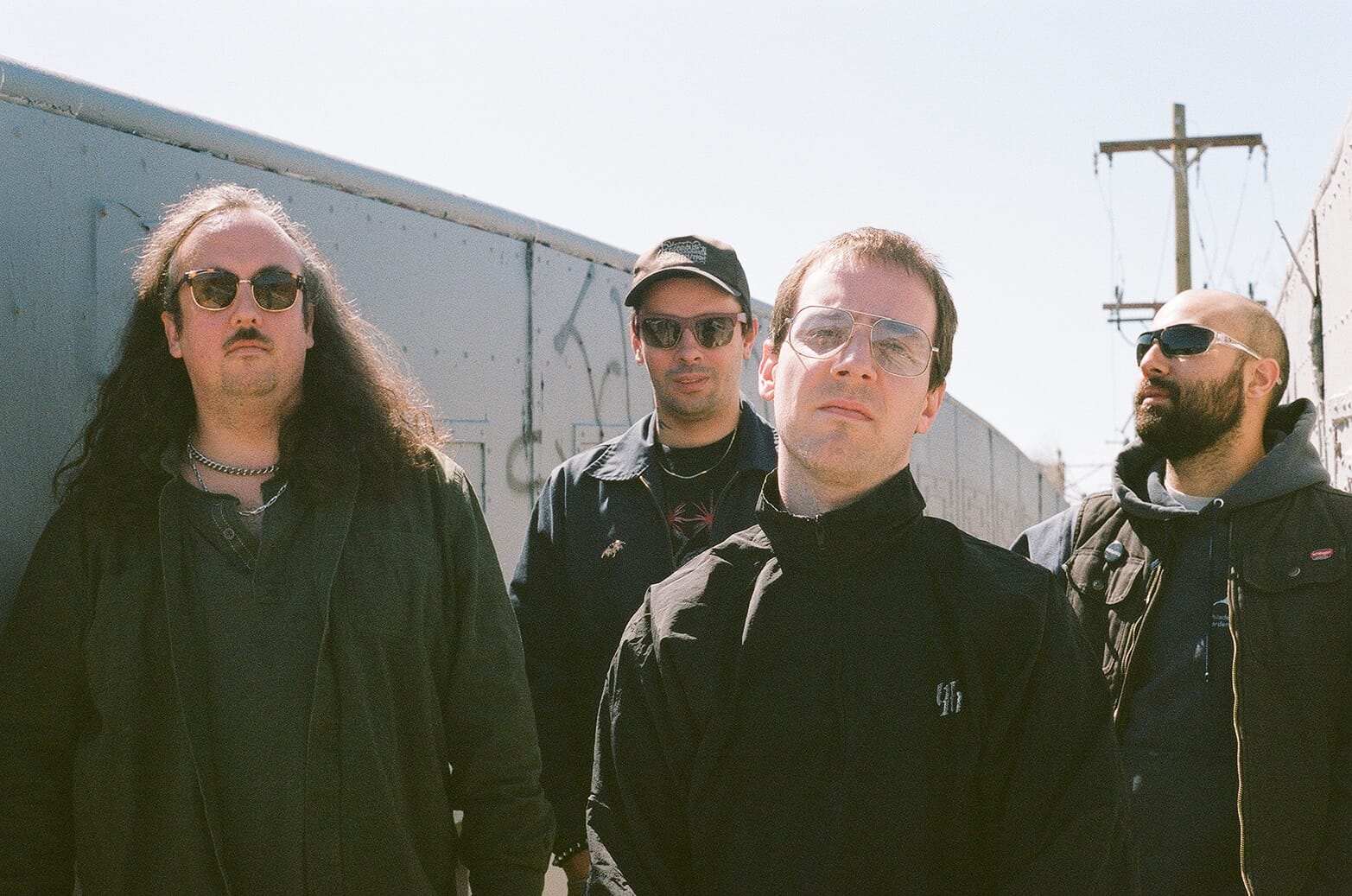
Honestly, I cannot settle fully with my own mind. The first half of the record feels stronger than the second, but I can't turn away from other moments of virtuosity: the pulsating drive of "Turn To Dusk" winking shamelessly at Motörhead’s energy; the masterful guitar work of “Serpent’s Curse”, recalling the Ramones’ airiness; or the absolute blast detonated in “The Standoff” drum introduction, an honest homage to the murkiest Black Metal.
On Hymns From The Hills, punk music is challenged once again. The walls have fallen and the band’s vision and ambitions, as well the cross-genre and inter-generational references, are now tangible. Poison Ruïn navigate the experimental turns of the new album without losing their footing, presenting themselves as more mature, more ambitious, fitted out for larger audiences. Punk purists, rest easy — the original identity remains, now closer than it ever was.
Album Highlights
Hymn From The Hills
Eidolon
Guts (Lay Your Self Aside)