

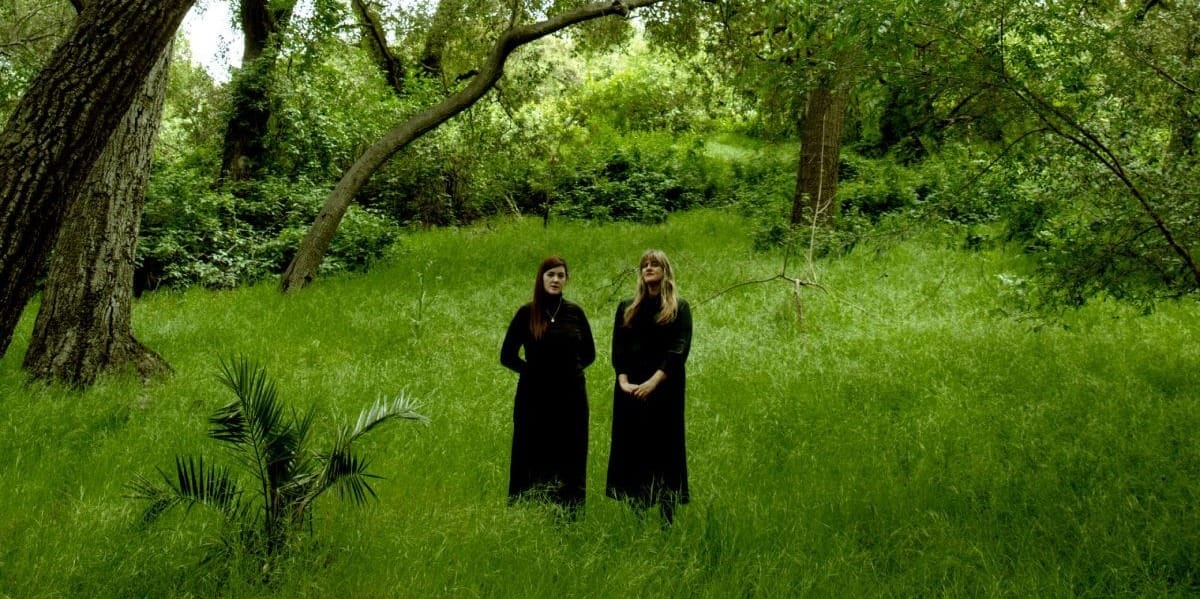
Philadelphia, 2014. Julianna Barwick and Mary Lattimore spend their first time together, after crossing paths while on tour. It didn’t take long for them to identify points of convergence in their artistic languages. While Barwick was expanding her background in church choirs into new dimensions through loop stations, extended reverbs, pianos, and analog synthesizers, Lattimore was challenging her classical training with effect pedals that deconstructed the textures of her harp, while progressively incorporating new instruments into her compositions. A decade later, ‘Tragic Magic’ feels all but inevitable.
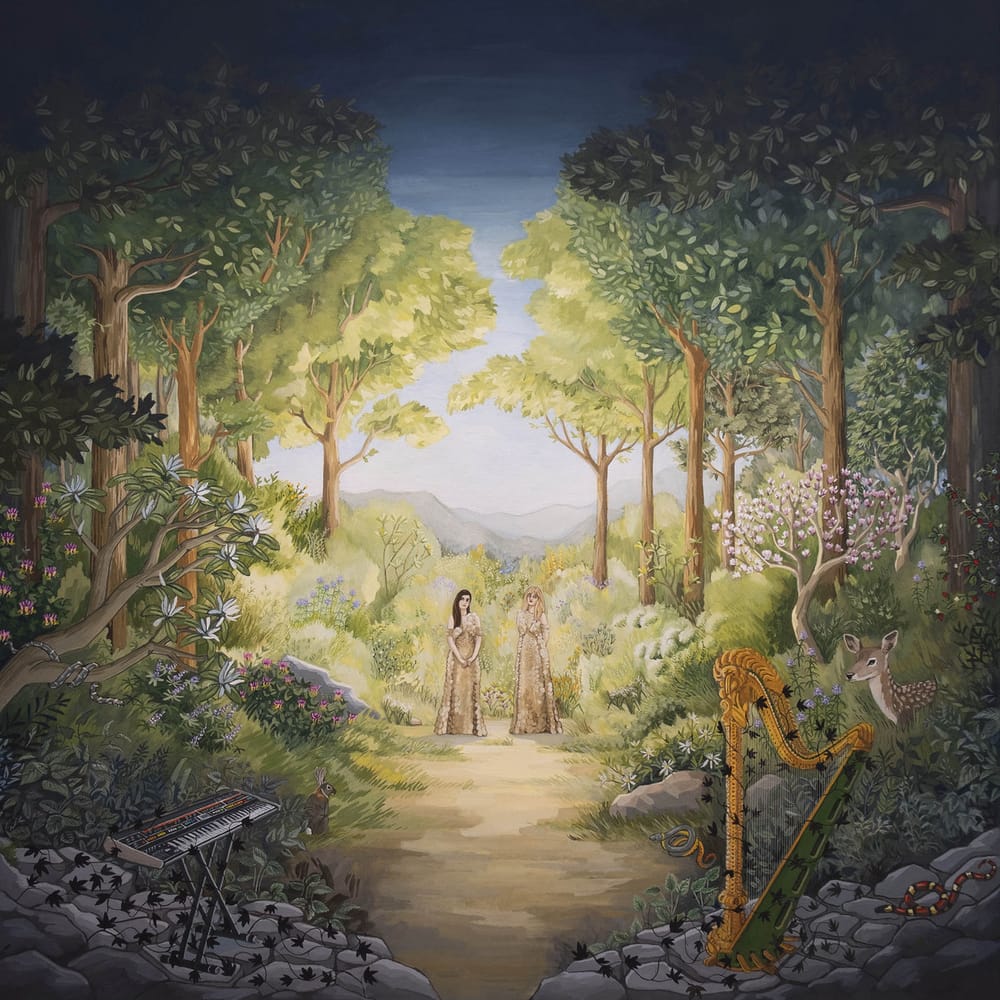
Still shaken by the tragic wildfires that swept through Los Angeles in January 2025, they accepted an invitation to collaborate on an album at France's Philharmonie de Paris, courtesy of the Musée de la Musique. To enrich their compositions, the museum opened its collection and granted access to some of its rare instruments, an opportunity described as “once in a lifetime”. Mary Lattimore was drawn to historical harps from the 18th and 19th centuries, while Julianna Barwick turned to classic analog synthesizers such as the Prophet-5 and Roland JUPITER-8, machines that helped redefine electronic music in the late 1970s and early 1980s. The emotional connection between the two became evident during the recording process, which lasted no more than nine days. Some of the seven tracks even emerged from first-take improvisations, without the use of any score, proof of the “musical telepathy” they have referenced in several interviews. The album - produced by Trevor Spencer (who has worked with Beach House, Fleet Foxes, and Father John Misty) - is the outcome of a necessary respite to reflect on tragedy. In the search for healing and solace, listeners are invited to glide through landscapes inspired by celestial and cosmic narratives.
Raising the curtain with “Perpetual Adoration” comes as no surprise. Barwick’s crystalline, reverberant vocals float above Lattimore’s harp, offering an honest glimpse on the emotional and artistic bond the duo now explores in the studio. Unfortunately, the following track - “The Four Sleeping Princesses” - fails to retain the coloring of its predecessor, drawing me into a repetitive greyish mood over an extended seven minutes. This is something that doesn’t happen with “Haze with no Haze,” which unfolds over a comparable duration, while revealing new layers with a nocturnal dynamism that works far better.Through the album's progression, the fluctuation between two dimensions becomes apparent: one more earthbound, in consonance with nature, and another more distant, opening onto a stellar panorama. An example of this is the transition to “Rachel’s Song,” a cleaner reinterpretation of Vangelis’s classic immortalized in the film Blade Runner, which had already been performed live on several occasions. Gifted by Roger Eno (Brian Eno’s brother), “Temple of the Winds” carries a neoclassical aura, once again highlighting the duo’s synergistic dynamic. The transition to the next track can only be described as an overwhelming cosmic leap. “Stardust” lifts us into a vibrant rhythmic field that stands out from the rest of the album. The analog warmth of the vintage synthesizers is remarkable, especially when combined with the nuanced patterns of the AKAI’s MPC, in perfect harmony with the other elements. The result, reminiscent of Tangerine Dream, takes us to the peak of this long-play, paving the way for the more emotionally charged closing track, “Melted Moon,” a piece inherently shaped by the trauma of distorted skies turned orange from the devastating wildfires.
Here we have a solid release, precisely what it should be. On Tragic Magic, Julianna Barwick and Mary Lattimore show no hesitation in facing the historical weight of the instruments in their hands, delivering a message of hope, even while knowing that nothing will ever be quite the same as it once was.
Album Highlights
Perpetual Adoration
Stardust
Melted Moon