

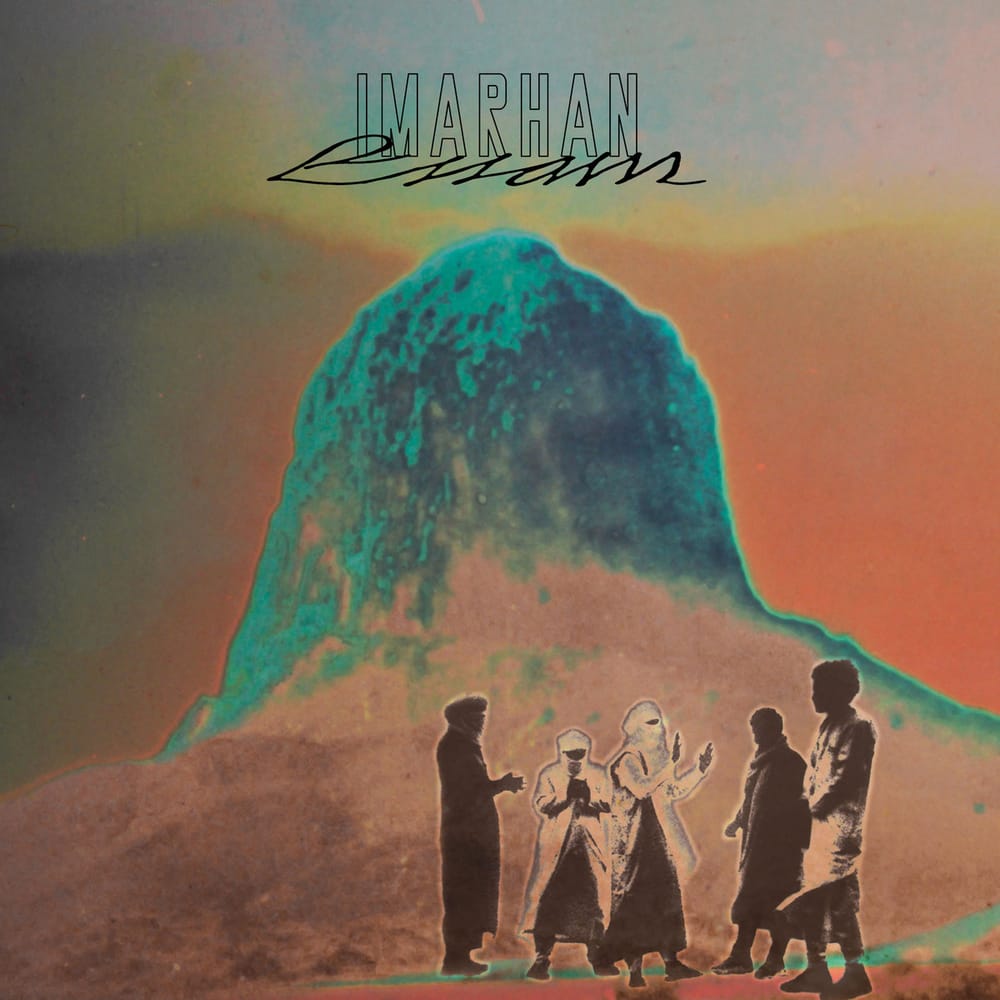
No matter your geographic setting, it is hard to question the existence of a world divided into pre and post-Covid eras. In the border regions between Algeria and Mali, this reality is equally present, as a long-standing conflict persists and tensions were further exacerbated by the pandemic. It is in this climate that the Algerian quintet Imarhan release “Essam”, an album that addresses themes of belonging and resilience, anchored in their cultural identity and collective experience.
The characteristic psychedelia of Tuareg Blues remains present, but this time enriched by the use of electronic elements, stemming from the collaboration between Maxime Kosinetz and Emile Papandreou on the album’s production. As with its predecessor, Aboogi Studio once again hosted the recording sessions, a space built by the band themselves in their hometown, Tamanrasset. This artistic choice infuses the album with an unexpected sense of fluidity - while the music is by no means stripped of the organic elements of Desert Blues, it undergoes a subtle evolution that ultimately brings something new to the genre. The electronic textures were crafted by Papandreou, who processed instruments in real time using a modular synthesizer, fusing these components with the band’s traditional sounds. Recordings were mostly live sessions in the studio’s large room, with spontaneous contributions from friends and the local community, who added handclaps, vocals, and the Tuareg energy that keeps the movement alive.
The doors are opened with “...Ahitmanin”. A gentle guitar inviting us in. Behind its serene surface lie deeper, darker themes, calling for collective awareness to navigate uncertain times, whether “in this world or another”. Next comes “Derhan N’Oulhine,” one of the most beautiful tracks on this LP, where the marriage between electronic production and Imarhan’s traditional sound is felt for the first time, layered with meticulous reverb. The track is built gradually, never forcefully, guiding us through an emotional trance. “Tellalt” takes its name from a type of acacia wood that, though rare, can be found in the Sahara Desert. It takes us back to a warmer, even inviting and familiar rhythm, which is gently interrupted by the more contemplative ambiance of “Tamiditin.” Electronic influences resurface in “Okcheur” (where the rhythm picks up) and even more so in “Azaman Amoutay,” which oscillates between precise percussion and dense, almost hypnotic synthesizers - another highlight of the album. The traditions of Desert Blues are exalted in “Tin Arayth.” The track is an invitation to dance and unity, set within a territory frequently explored by the band, as well as by fellow genre artists such as Songhoy Blues, Bombino, or Mdou Moctar. In the closing steps of the album, we are invited to slow our pace once more: “Tinfoussen,” with its minimalist structure, moves forward unhurriedly; “Adounia Tochal,” sung in chorus like a warm breeze; and finally “Assagasswar,” a closing journey where traditional instruments such as the tinde and imzad once again entwine with the synthesizers’ textures.
Essam is a record that benefits from its experimental edge, best appreciated under the fading light of dusk, or in moments of reflection on hope and togetherness warmed by a crackling fire. Though we’re not in front of an outstanding album, it must be said that its production is truly excellent. Imarhan’s sound evolves gracefully, coherently, never straying from its roots.
Album Highlights
Derhan N’Oulhine
Azaman Amoutay
Adounia Tochal